
Lessinia stone or Prun stone
The Quarries and Stone of Lessinia: a Natural Wealth of Verona
Lessinia, a geographical area located in the Venetian Prealps, occupies a large part of the territory of the province of Verona. This area, often called the "mountain of the Veronese," is famous for being the place where, over 60 million years ago, 72 layers of sedimentary rock known as Prun Stone or Lessinia Stone were formed.This Verona stone, ductile and relatively easy to extract, played a fundamental role in the construction of many cities. of Lessinia and even in the city of Verona itself.
The extraction began in Prun, a small village in the north of the municipality of Negrar. Subsequently, the activity he moved in the municipality of Sant'Anna d'Alfaedo, where there are open-air quarries with the best quality stone. &` It is here that the main companies that work with stone have developed in the artisan district of Croce dello Schioppo.
The Extraction Process of the Lessinia Stone
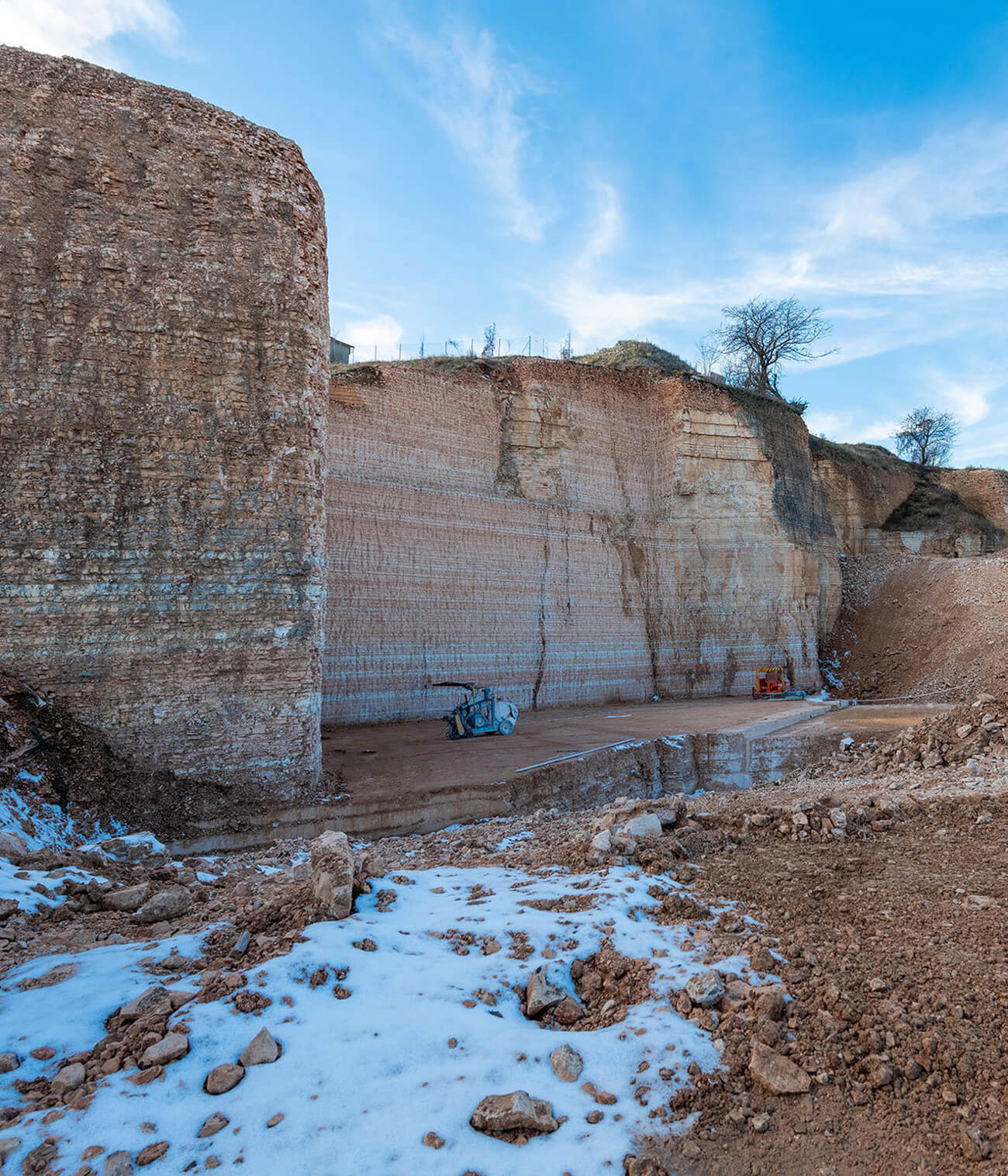
The extraction of Lessinia Stone involves the exposure of stone beds to extract stone slabs in the desired dimensions (usually 210x210 cm) directly on site. After establishing the desired horizontal geometry, cuts are made orthogonal to the quarry plane to separate the slabs. This extraction process is carried out with the help of hydraulic hammers which separate the stone layers as if they were sheets of a book. The resulting sheets have naturally rough surfaces, ready for transport to processing plants.The extraction involves the excavation and subsequent processing of quarry areas of considerable size to guarantee maximum homogeneity. of the material. The ability in extraction lies in the ability to obtain maximum material yield, avoiding breakages and imperfections that would make the slabs unusable.
Uses of Verona Stone
The Lessinia Stone of Verona is renowned for its variety of colors, ranging from white (rarer) to pink. Today, it is used in a wide range of applications, including both interior and exterior flooring and cladding, as well as finishes and furnishing elements. Experienced craftsmen combine specific processes with each layer of stone to meet the needs of projects of different scope. La Pietra di Lessinia offers a unique atmosphere of history, warmth and welcome in every application.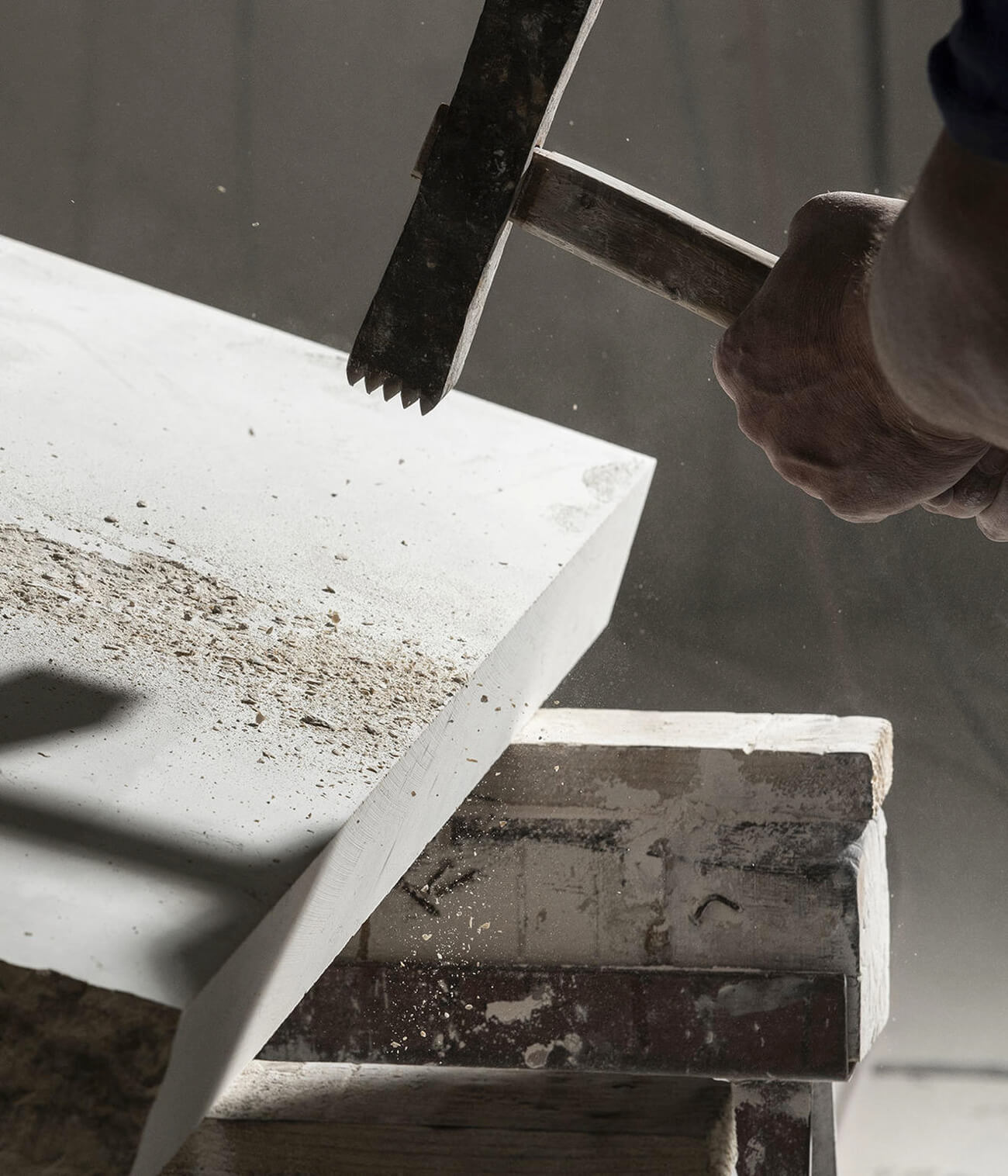
Working of the Lessinia Stone (or Prun Stone)
The peculiarities of Lessinia Stone require careful selection of layers and processing methods. This choice concerns:The layers ("courses") to use
The type and number of cuts to perform ("plan search")
The quantity necessary to select the most suitable material as homogeneous as possible.
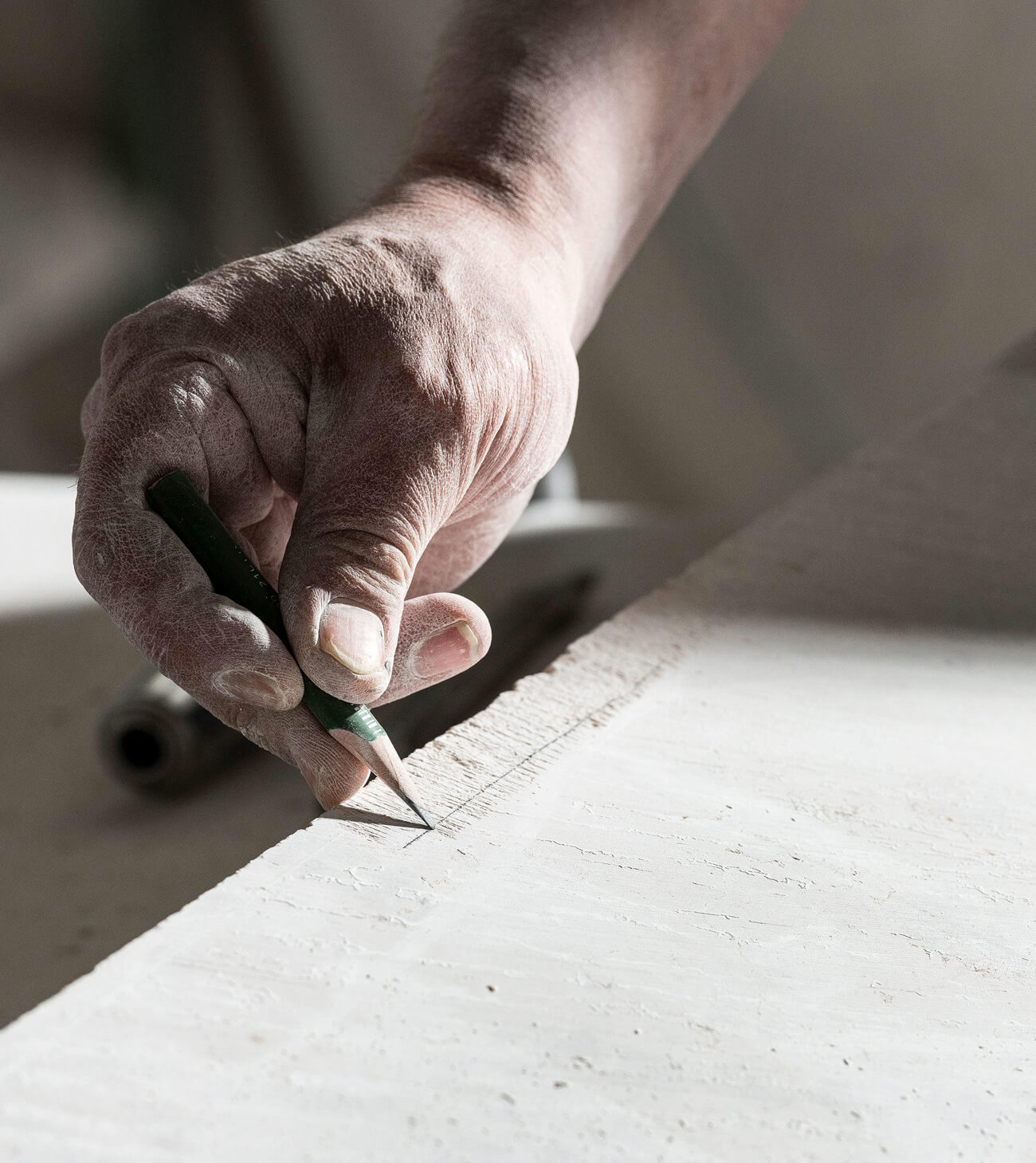
To guarantee a high quality product that meets customer needs, the company has chosen to work only with the best layers and thickest thicknesses. suitable. This choice, even if it involves higher production costs, high, it is was made to guarantee the highest quality and the creation of excellent craftsmanship.
The possibility to supervise the entire production process, from extraction to delivery, facilitates the choice of the best solutions, both for larger projects both small and large works. To obtain precise and personalized advice, the company invites customers to contact them from the early stages of conception and design.
The Stone of Prun
The Pietra di Prun quarries developed in the Prun area, in the municipality of Negrar, Verona, from which the stone takes its name. In the past, these quarries were developed as underground galleries, extracted in order for chambers and pillars, due to the considerable quantity of non-marketable overburden material superimposed on the production bank. This extraction method was motivated by the fact that, when the main energy was provided by humans, removing the overburden would require too much effort. This technique, although it presented some challenges related to the static structure of the quarries, light and air, offered protection against bad weather, which in the area had harsh winters with temperatures below zero.The layout of the underground tunnels was well organised, suggesting a deep-rooted craftsmanship tradition passed down from generation to generation.
The History of the Prun Stone or Lessinia Stone
The extraction of stone materials in the Veronese Lessinia and the production of Pietra di Prun date back to before the age of of bronze. Some scholars believe that extraction began before other limestone rocks around the age of of iron. &` was widely used to build fortified villages on the hills and "Rhaetian" type houses.In the 5th century BC, on Monte Loffa (Sant'Anna d'Alfaedo-Verona), the Prun Stone was discovered. was used to cover the walls of basement homes and build paved terraces communicating via stairs.
During the age Roman, between the 1st century BC. and the 4th century AD, the use of other quarries in Valpolicella had a greater impact on trade, obscuring the production of Prun Stone.
In the fourteenth century, with the increase in trade, the Prun Stone market experienced significant growth. Between the fifteenth and sixteenth centuries, Negrar, a center of exchange with Verona, became developed as a market for Pietra di Prun, although in a subordinate position compared to Sant'Ambrogio, a key center in Valpolicella.
In the historic center of Verona, it is It is possible to find numerous buildings with Lessinia stone slabs of various sizes. An emblematic example is the paving of Piazza delle Erbe.
Characteristics of the Prun Stone
The Prun Stone is a unique material with overlapping banks. The layers, often similar or identical in different places of the mining basin, are separated by a thin layer of reddish clay material, which allows relatively easy separation of the layers. Sometimes there are gaps in these clay layers, making detachment uncertain and difficult, with frequent breakages of the slabs.Fossilized remains of animal species from different eras are often found in the extracted material, which has allowed the creation of a local museum in Sant'Anna d'Alfaedo, which exhibits specimens of different species, such as sharks, turtles and ammonites .
In recent years, the use of open-pit quarries has increased increased significantly, with the useful layers of the Stone exposed to the surface.
The Prun Stone becomes the Lessinia Stone
In the 70s, the activity trade linked to the Prun Stone is grown considerably. Numerous companies were born, concentrating in the artisanal area of Croce dello Schioppo, Sant'Anna d'Alfaedo and Negrar. The main mining area is became Monte Loffa in Sant'Anna d'Alfaedo and neighboring basins.To commercially reflect the large territory from which it comes, the Prun Stone is was renamed Pietra della Lessinia.
Today, the Lessinia Stone is used in a wide range of applications in the construction industry. From its natural shape to different surface finish configurations, it is possible to adapt it to architectural contexts of various levels. With technological advances, the Lessinia Stone is been used in architectural interventions of notable value.
The companies that work with Lessinia Stone are members of the Lessinia Stone Protection Consortium and follow quality protocols. specific.
To see what can be done create with our Lessinia stone visit the projects section complete.
If you want to discover all our products click here.